Follow Us


-
+91 9137065004
-
Mumbai, Maharashtra



Understanding Anti-Seizure Medicines: Key Takeaways from Dr. Natasha Tipnis Shah
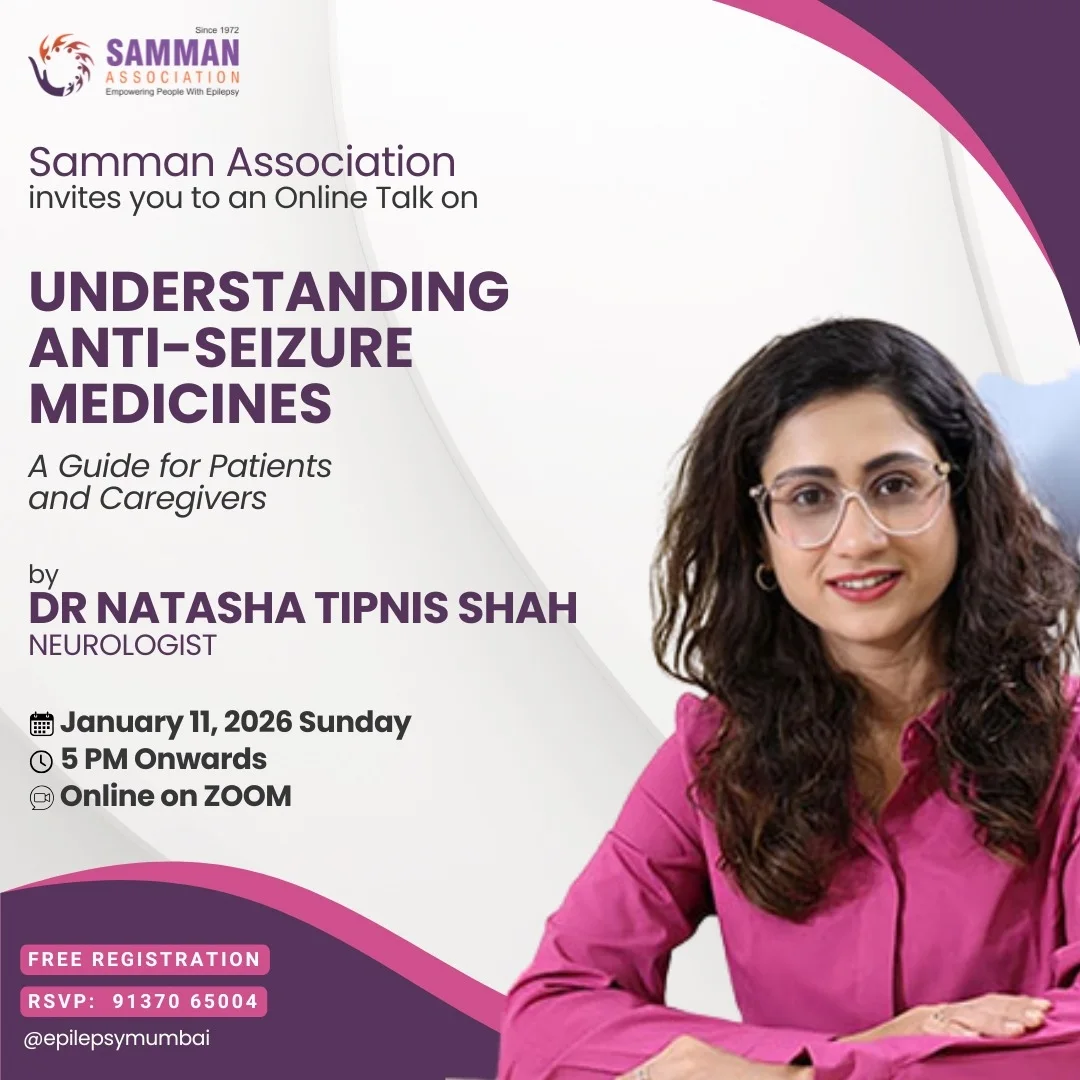

At Samman Association, we believe that the right information can make living with epilepsy safer, easier, and less stressful. On 11th January, we hosted an online session with Dr. Natasha Tipnis Shah, a neurologist and a member, who spoke to patients and caregivers about anti-seizure medicines, their use, and how to manage epilepsy better in daily life.
This blog shares the main points from her talk on anti-seizure medicines.
Understanding Epilepsy and Its Treatment
Dr. Natasha explained that epilepsy is not the same for everyone. There are different types of seizures, such as focal seizures (which start in one part of the brain) and generalized seizures (which involve both sides of the brain). Because of this, treatment also needs to be personalized.
Anti-seizure medicines come in many forms, including:
- Tablets and mouth-dissolving tablets
- Syrups and dispersible tablets
- Extended-release tablets (which release medicine slowly over time)
Not every medicine suits every person. Sometimes, doctors may change the form or type of medicine to get better seizure control with fewer side effects.
Emergency Care: Midazolam Nasal Spray
Midazolam nasal spray is an emergency medicine used during seizures.
- The spray works by delivering the medicine through the nose, where it is quickly absorbed into the body
- It is meant for emergency use, not daily treatment
- Caregivers and family members should be trained in how and when to use it
Patients and caregivers should follow their doctor’s instructions for emergency medicines and never self-prescribe.



Side Effects and Why Monitoring Matters
Side effects can happen with many anti-seizure medicines. Some common concerns include:
- Drowsiness or tiredness
- Mood changes
- Weight changes
- Effects on bone health
Long-term use of some medicines can affect bones, which is why doctors may suggest calcium and vitamin D supplements.
Mental Health and Epilepsy Medicines
Dr. Natasha explained that some anti-seizure medicines can affect mood.
For example:
- Some medicines may improve mood
- Others may cause irritability, sadness, or mood swings
Patients and caregivers to watch for changes in behavior or emotions and report them to their neurologist.
Always inform your neurologist about:
- Psychiatric medicines
- Ayurvedic or alternative treatments
- Any new medicine started for another health condition
This helps doctors avoid harmful drug interactions.
Safety at Home and Work
A key message from the session was the importance of support systems.
- Informing a trusted friend, or colleague about epilepsy
- Teaching them what to do during a seizure
- Watching for warning signs like confusion, talking to oneself, or getting lost
If such signs appear, seek medical help promptly.
Your Role as a Patient or Caregiver
Managing epilepsy is a team effort between the doctor, patient, and caregiver. Please:
- Take medicines exactly as prescribed
- Never stop or change doses on their own
- Attend regular follow-up visits
- Get routine blood tests and health check-ups
- Ask questions and share concerns openly with your neurologist
We thank Dr. Natasha Tipnis Shah for sharing her time and knowledge with our community. Our goal is to continue creating safe spaces where people living with epilepsy and their caregivers can learn, ask questions, and feel supported. If you have concerns about your medicines or symptoms, please consult your neurologist.
Together, through awareness and the right care, we can build a more informed and compassionate society for people living with epilepsy.

Saima Hayden
Nostrud aliquip exrcitation laboris
nisiut temp duis autey. Lorem unt
ipsum sit amet elit dolor.




ABOUT US
Samman Association, the Mumbai Chapter of Indian Epilepsy Association, is dedicated to empowering people with epilepsy and their caregivers, delivering comprehensive support, driving public awareness, fostering research, and paving the way towards a future free from the limitations of epilepsy.